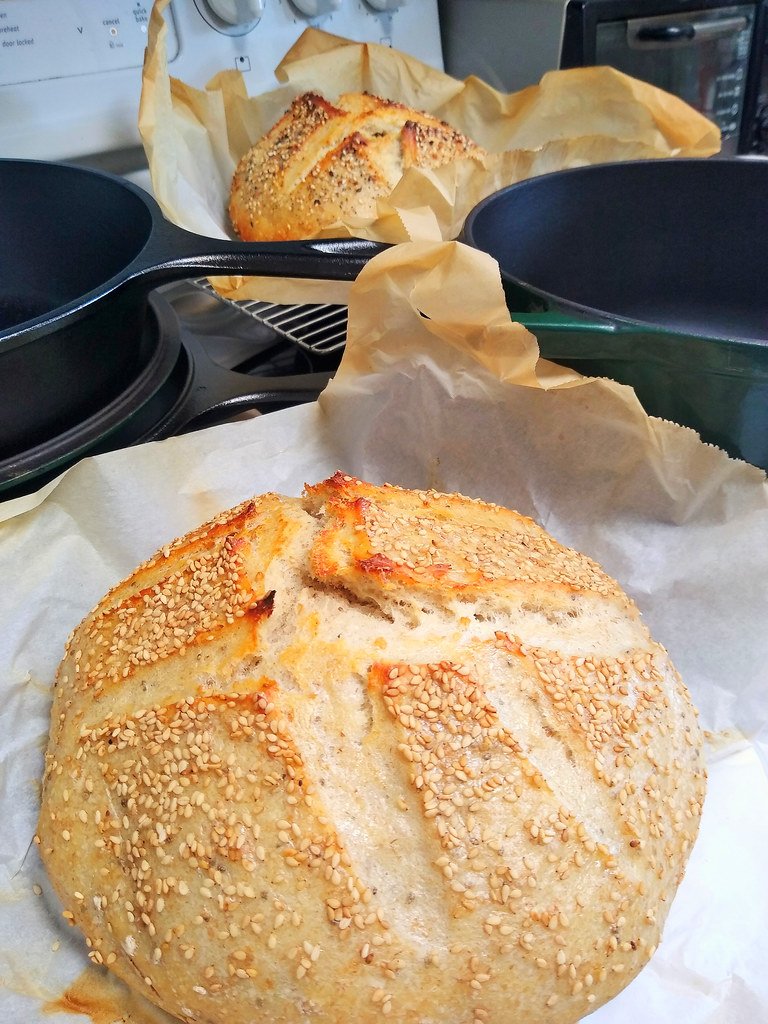
If you have never baked a loaf, or you have been failing at sourdough and need a win, start here. No-knead bread produces a genuinely excellent loaf — open crumb, crackling crust — with almost no technique.
The insight: time replaces kneading. Given enough hours, gluten organises itself without any work from you.
Ingredients
- 400g bread flour (about 3¼ cups — but please use a scale)
- 320g water, room temperature (80% hydration)
- 8g fine salt (about 1½ tsp)
- 1g instant yeast (about ¼ tsp)
Method
- Mix (2 minutes). Combine everything in a large bowl and stir until no dry flour remains. It will be a shaggy, sticky mess. That is correct. Do not knead.
- Rest (12–18 hours). Cover and leave at room temperature. It’s ready when roughly doubled and the surface is bubbled. Cooler kitchen, longer wait.
- Shape (5 minutes). Scrape onto a floured counter. Fold the edges into the middle a few times to form a rough ball, then flip seam-side down and drag it toward you a few times to build surface tension.
- Second rise (1–2 hours). Rest seam-side up in a floured tea towel in a bowl. Meanwhile preheat your pot and oven to 475°F for at least 30 minutes.
- Bake. Tip onto parchment, score once about ½ inch deep, lower into the hot pot. Lid on 20 minutes; lid off 20–25 minutes until deep brown and 205–210°F inside.
- Cool 2 hours. Non-negotiable — cutting early makes it gummy.
What to notice
This recipe teaches the three variables that govern all bread: hydration (why the dough is sticky and the crumb open), fermentation (why time substitutes for effort), and steam (why the lid goes on first). Everything else you bake is a variation.
Troubleshooting
- Spread flat? Over-fermented, or shaping built no tension. Reduce the rest by a few hours next time.
- Dense? Under-fermented — likely a cold kitchen. Give it longer, not more yeast.
- Gummy? You cut it early, or it needed longer in the oven.
Full diagnostics: why is my bread gummy, dense, or flat?