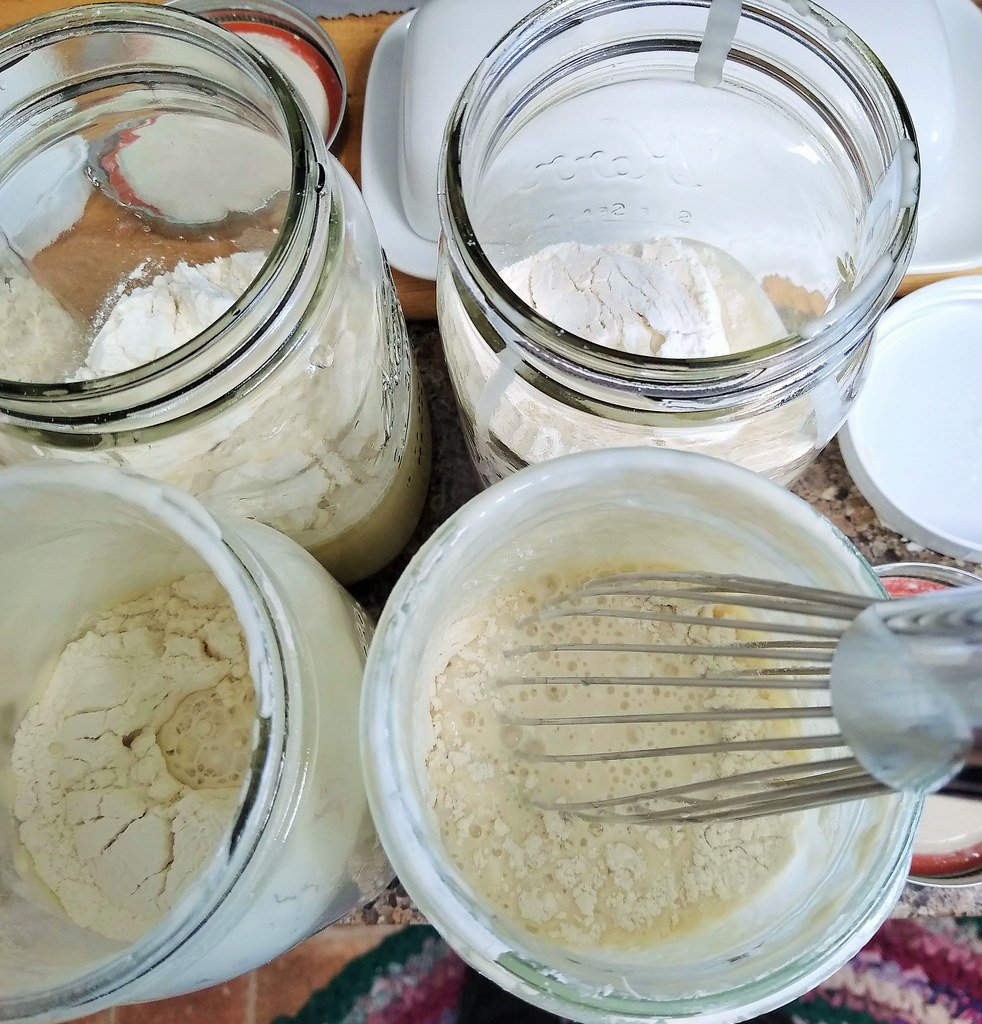
A sourdough starter is a stable culture of wild yeast and lactic acid bacteria living in a flour-and-water paste. You do not need to buy one, and you do not need pineapple juice, grapes, or any other trick. You need flour, water, and about a week.
What you need
- Whole wheat or rye flour for the first few days — the bran carries far more microbial life than white flour and gets things moving faster
- White bread flour thereafter
- Water — if yours is heavily chlorinated, leave it out overnight or use filtered
- A jar, loosely covered so gas can escape
Day by day
Day 1
Mix 50g whole wheat flour with 50g water. Stir to a thick paste. Cover loosely, leave somewhere warm (75–80°F is ideal).
Day 2
Probably nothing. Maybe a few bubbles. Do nothing, or stir it. Both fine.
Day 3 — the false rise
Many starters erupt with activity around now and smell sharp, cheesy, or like vomit. This is not yeast. It is a bloom of Leuconostoc bacteria, and it will die off as the culture acidifies. Nearly everyone who gives up quits here, or on day 4 when it goes quiet.
Begin discarding and feeding: keep 50g of starter, discard the rest, add 50g flour + 50g water.
Days 4–5 — the quiet spell
Activity often stops completely and the smell turns sour or acetone-like. This is normal and it is the culture sorting itself out. Keep feeding once every 24 hours. Switch to white bread flour, or a 50/50 mix.
Days 6–7 — real activity
You should see a genuine, predictable rise — doubling within 4–8 hours of feeding — and the smell turns pleasantly tangy and yoghurty. That rhythm, not the bubbles, is the sign you have a working starter.
How to know it’s actually ready
The reliable test is consistency: it should double predictably, within a similar window, after several consecutive feedings. A starter that doubles once and then sulks is not ready to raise a loaf.
The float test — a spoonful in water — is a reasonable quick check but produces false negatives with wetter starters. Trust the rise-and-timing pattern first.
Keeping it alive
- Baking weekly? Keep it on the counter, feed once a day.
- Baking occasionally? Keep it in the fridge and feed once a week. Take it out and give it two or three feedings before you bake.
- Dark liquid on top? That’s “hooch” — alcohol, meaning it’s hungry. Pour it off and feed. Not a problem.
Why bother discarding?
Because without it, the acid concentration climbs until it suppresses the very yeast you’re cultivating, and the volume becomes absurd. Discarding keeps the culture young and the jar manageable.
When your first loaf disappoints
A young starter often makes dense bread for the first several bakes even when it looks lively — the population is still stabilising. Give it two or three weeks before you judge it, and see the troubleshooting guide if problems persist.